

Press Release
October 22, 2026
- Nature & Parks
Outcomes of the Regional Workshop on OECMs in Asia and Release of the APAP OECM Roadmap (2026–2030)
October 22, 2026
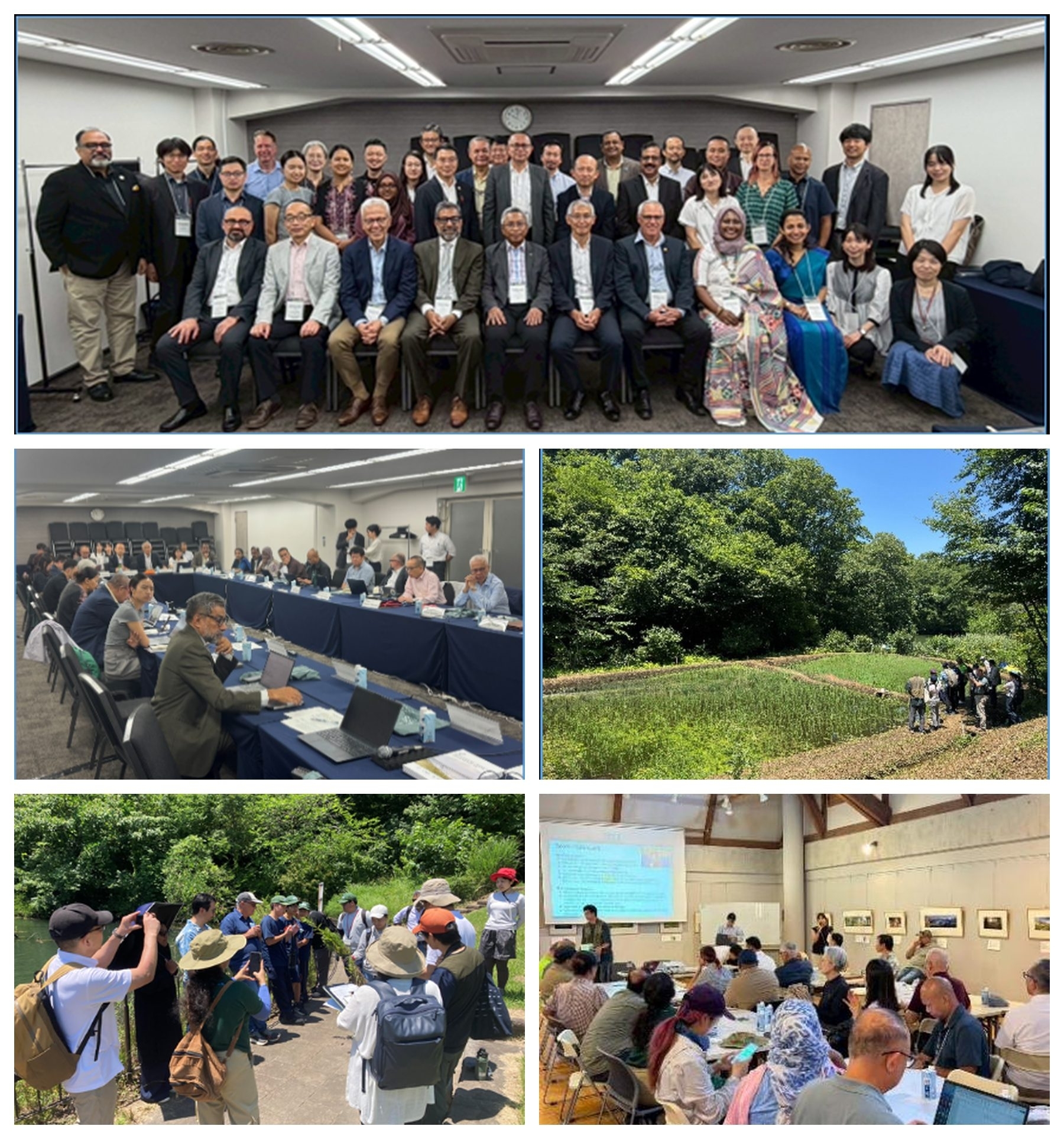
1.Under the framework of the Asia Protected Areas Partnership (APAP), the Ministry of the Environment, Japan convened the Regional Workshop on Advancing Other Effective Area-based Conservation Measures (OECMs) in Asia in Tokyo from July 9 to 11, 2026.
2.Building on the discussions and outcomes of the workshop, the APAP released the updated OECM Roadmap (2026–2030) on October 19, 2026. The updated roadmap builds upon and revises the APAP OECM Roadmap released in 2024, and sets out priority actions and directions for regional cooperation to advance OECMs across Asia.
APAP OECM Roadmap (2026–2030)
Advancing Area-based Conservation in Asia: Regional Assessment and APAP OECM Roadmap (2026-2030) - resource | IUCN
1. Workshop Title
Regional Workshop on Advancing Other Effective Area-based Conservation Measures (OECMs) in Asia
―Accelerating Implementation of GBF Target 3 through Cross-Sector Partnerships
―Accelerating Implementation of GBF Target 3 through Cross-Sector Partnerships
2. Background
Achieving Target 3 of the Kunming-Montreal Global Biodiversity Framework (KMGBF), commonly known as the “30x30 Target,” requires not only the expansion and effective management of protected areas but also the advancement of Other Effective Area-based Conservation Measures (OECMs). APAP developed the APAP OECM Roadmap (2024–2030) (https://iucn.org/sites/default/files/2024-11/apap-roadmap-for-oecms.pdf) following a regional workshop held in Tokyo in 2024 and has since supported efforts to promote OECMs across Asia. This workshop was convened as a mid-term review of the Roadmap to share progress, challenges and lessons learned from national OECM initiatives and to discuss future directions for regional cooperation.
3. Date and Venue
July 9–11, 2026, Tokyo, Japan
4. Organizers
Ministry of the Environment, Japan and APAP
5. Participants
A total of 42 participants attended, including government representatives from 12 Asian countries as well as representatives from APAP member organizations, international organizations, research institutions and other stakeholders.
6. Programme
・Global developments related to OECMs and progress across Asia
・National presentations on OECM policies, governance frameworks and implementation experiences
・Thematic discussions on OECM policy, engagement of non-state actors, and the design of OECM frameworks suited to diverse ecosystem and governance types
・Mid-term review of the APAP OECM Roadmap (2024–2030)
・Development of the APAP OECM Roadmap (2026–2030)
・Field visit to the Hachioji Nagaike Park, nationally certified “Kyosei Site” and recognized OECM
7. Outcomes
Participants shared progress, experiences and challenges related to OECM implementation across Asia and confirmed that the region is gradually moving from an initial phase of understanding the OECM concept towards practical implementation and delivery. Participants also reaffirmed that advancing OECMs requires the engagement of a wide range of actors, including governments, local communities, private sector actors, research institutions and civil society organizations.
The workshop further highlighted that approaches to OECM implementation vary considerably according to national legal frameworks and socio-ecological contexts. Rather than applying a single model, countries emphasized the importance of developing context-specific approaches that respond to their respective governance systems, ecosystems and conservation priorities. Participants also conducted a mid-term review of the APAP OECM Roadmap (2024–2030) and, based on the findings and recommendations emerging from the review, developed the updated APAP OECM Roadmap (2026–2030). Participants confirmed their commitment to accelerating OECM implementation through strengthened national frameworks, capacity development and enhanced regional cooperation in support of achieving KMGBF Target 3.
The workshop further highlighted that approaches to OECM implementation vary considerably according to national legal frameworks and socio-ecological contexts. Rather than applying a single model, countries emphasized the importance of developing context-specific approaches that respond to their respective governance systems, ecosystems and conservation priorities. Participants also conducted a mid-term review of the APAP OECM Roadmap (2024–2030) and, based on the findings and recommendations emerging from the review, developed the updated APAP OECM Roadmap (2026–2030). Participants confirmed their commitment to accelerating OECM implementation through strengthened national frameworks, capacity development and enhanced regional cooperation in support of achieving KMGBF Target 3.
8. APAP OECM Roadmap (2026–2030)
The APAP OECM Roadmap (2026–2030) is a regional report that sets out priority actions and directions for regional cooperation to advance OECMs across Asia and support achievement of KMGBF Target 3. The Roadmap was developed based on the outcomes of the workshop, including country presentations and thematic discussions, as well as findings from a regional survey conducted in advance of the meeting.
The report is organized into four parts. Part I presents an assessment of progress and challenges related to OECM implementation across Asia. Part II synthesizes key lessons learned from the workshop and reviews progress made under the APAP OECM Roadmap (2024–2030). Part III presents an updated regional implementation framework and Roadmap for the period 2026–2030. Part IV provides strategic recommendations for governments, APAP member organizations, international organizations and other partners to support future OECM implementation across the region.
In Part III, the updated Roadmap conceptualizes OECM implementation as a continuum from Identify → Assess → Recognise → Report → Monitor → Improve → Sustain, while providing a long-term framework for regional cooperation, technical assistance, knowledge
exchange and capacity development. It is structured around four mutually reinforcing Strategic Pillars: (1) Building Strong Policy and Institutional Foundations; (2) Scaling Identification, Recognition and Reporting; (3) Ensuring Long-Term Quality and Conservation Effectiveness; and (4) Expanding Partnerships and Shared Stewardship.
Further details are available in:
APAP OECM Roadmap (2026–2030)
Advancing Area-based Conservation in Asia: Regional Assessment and APAP OECM Roadmap (2026-2030) - resource | IUCN
The report is organized into four parts. Part I presents an assessment of progress and challenges related to OECM implementation across Asia. Part II synthesizes key lessons learned from the workshop and reviews progress made under the APAP OECM Roadmap (2024–2030). Part III presents an updated regional implementation framework and Roadmap for the period 2026–2030. Part IV provides strategic recommendations for governments, APAP member organizations, international organizations and other partners to support future OECM implementation across the region.
In Part III, the updated Roadmap conceptualizes OECM implementation as a continuum from Identify → Assess → Recognise → Report → Monitor → Improve → Sustain, while providing a long-term framework for regional cooperation, technical assistance, knowledge
exchange and capacity development. It is structured around four mutually reinforcing Strategic Pillars: (1) Building Strong Policy and Institutional Foundations; (2) Scaling Identification, Recognition and Reporting; (3) Ensuring Long-Term Quality and Conservation Effectiveness; and (4) Expanding Partnerships and Shared Stewardship.
Further details are available in:
APAP OECM Roadmap (2026–2030)
Advancing Area-based Conservation in Asia: Regional Assessment and APAP OECM Roadmap (2026-2030) - resource | IUCN
Contact
Office for Local Nature-positive Transition, Biodiversity Policy Division, Nature Conservation Bureau, Ministry of the Environment of Japan
- Direct number
- +81-(0)3-5521-8343