

Press Release
July 14, 2026
- Global Environment
Outcome of the 21st Japan–EU High-Level Dialogue on the Environment
1. The Ministry of the Environment (MOE) of Japan and the European Commission's Directorate-General for Environment (DG ENV) held the 21st Japan–EU High-Level Dialogue on the Environment on June 11, 2026 in Tokyo.
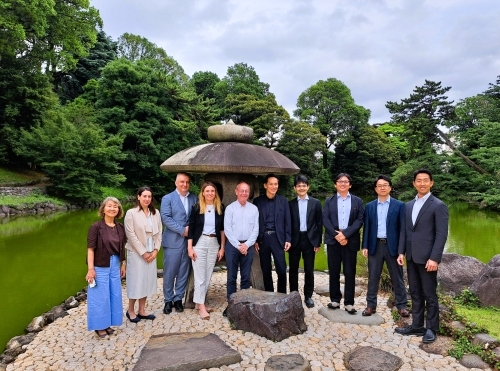
2. The meeting was hosted by MOE Japan and co-chaired by DOI Kentaro, Vice-Minister for Global Environmental Affairs, MOE Japan, and Mr. Patrick Child, Deputy Director-General for Environment at the European Commission. Participants exchanged views on key environmental issues and discussed cooperation to implement and advance the Japan–EU Green Alliance.
2. The meeting was hosted by MOE Japan and co-chaired by DOI Kentaro, Vice-Minister for Global Environmental Affairs, MOE Japan, and Mr. Patrick Child, Deputy Director-General for Environment at the European Commission. Participants exchanged views on key environmental issues and discussed cooperation to implement and advance the Japan–EU Green Alliance.
■ Outline of the Meeting
The co-chairs reaffirmed the importance of continued Japan–EU cooperation in addressing global environmental challenges including biodiversity loss and pollution. They shared the view that this dialogue contributes to advancing concrete cooperation in the environmental dimension of the Japan–EU Green Alliance established in 2021.
On circular economy, the participants exchanged updates on recent policy developments on the field of circular economy in both Japan and the EU and welcomed the progress under the Joint Working Group on Circular Economy launched in September last year. They discussed policies and approaches for enhancing circularity, such as legislative measures, action plans, product design, among others, including in fora such as the G7 and the G20. They shared the view that they are like-minded countries with common policy goals on circular economy and emphasized the importance of aligning rules and standards where possible, which promotes market expansion and private sector investments, and thereby contributes to achieving common policy objectives, while recognizing differences in some policy and regulatory approaches. They confirmed to further enhance bilateral cooperation on circular economy policies, including on critical minerals and raw materials, and key value chains. They recognized the importance of avoiding unintended trade and supply chain disruption between Japan and the EU, which may result from regulations related to circular economy, taking into account complex, interconnected global supply chains. Japan and the EU also confirmed their intention to continue cooperating and contributing towards an international legally binding instrument on plastic pollution with a view to concluding the negotiation at INC5.4.
On biodiversity, the participants consented to the importance of the Global Review of the Implementation of the Kunming-Montreal Global Biodiversity Framework at the 17th meeting of the Conference of the Parties (COP17) to the Convention on Biological Diversity, and the need to enhance implementation efforts in light of the ambition and implementation gaps. Japan and the EU highlighted the importance of mainstreaming biodiversity across sectors and achieving a nature-positive world, as well as advancing efforts towards the “30 by 30” target. Japan and the EU also underlined the importance of further discussions leading up to CBD COP 17 on the operationalization of the multilateral mechanism for the fair and equitable sharing of benefits from the use of digital sequence information on genetic resources (DSI), including the Cali Fund. The participants also discussed measures to address deforestation and exchanged views on the Convention on International Trade in Endangered Species of Wild Fauna and Flora (CITES).
On chemicals management, discussions covered the implementation of the Global Framework on Chemicals (GFC) and preparations for its first International Conference to be held within this year. The participants also exchanged views on addressing PFAS, underscoring the importance of international cooperation, as well as on the implementation of the Minamata Convention on Mercury and preparations for its 7th Conference of the Parties (COP7) marking the tenth anniversary of its entry into force.
Both sides discussed the future directions of cooperation in environmental fields and consented to promote exchanges at the working level in areas such as circular economy, biodiversity, and chemicals management. They also confirmed the importance of continued cooperation among relevant stakeholders in related areas, including international water issues, towards the 2026 UN Water Conference.
In conclusion, both sides emphasized the need to further strengthen Japan–EU cooperation on environmental issues. The next High-Level Dialogue on the Environment is expected to take place in Brussels in 2027.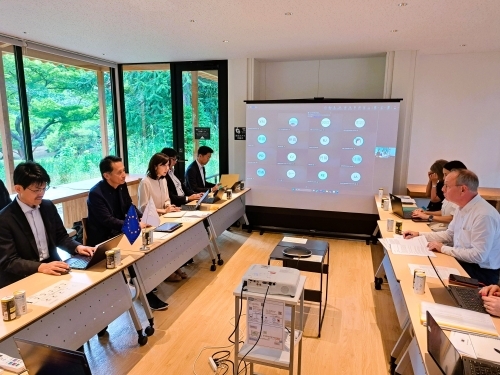
On circular economy, the participants exchanged updates on recent policy developments on the field of circular economy in both Japan and the EU and welcomed the progress under the Joint Working Group on Circular Economy launched in September last year. They discussed policies and approaches for enhancing circularity, such as legislative measures, action plans, product design, among others, including in fora such as the G7 and the G20. They shared the view that they are like-minded countries with common policy goals on circular economy and emphasized the importance of aligning rules and standards where possible, which promotes market expansion and private sector investments, and thereby contributes to achieving common policy objectives, while recognizing differences in some policy and regulatory approaches. They confirmed to further enhance bilateral cooperation on circular economy policies, including on critical minerals and raw materials, and key value chains. They recognized the importance of avoiding unintended trade and supply chain disruption between Japan and the EU, which may result from regulations related to circular economy, taking into account complex, interconnected global supply chains. Japan and the EU also confirmed their intention to continue cooperating and contributing towards an international legally binding instrument on plastic pollution with a view to concluding the negotiation at INC5.4.
On biodiversity, the participants consented to the importance of the Global Review of the Implementation of the Kunming-Montreal Global Biodiversity Framework at the 17th meeting of the Conference of the Parties (COP17) to the Convention on Biological Diversity, and the need to enhance implementation efforts in light of the ambition and implementation gaps. Japan and the EU highlighted the importance of mainstreaming biodiversity across sectors and achieving a nature-positive world, as well as advancing efforts towards the “30 by 30” target. Japan and the EU also underlined the importance of further discussions leading up to CBD COP 17 on the operationalization of the multilateral mechanism for the fair and equitable sharing of benefits from the use of digital sequence information on genetic resources (DSI), including the Cali Fund. The participants also discussed measures to address deforestation and exchanged views on the Convention on International Trade in Endangered Species of Wild Fauna and Flora (CITES).
On chemicals management, discussions covered the implementation of the Global Framework on Chemicals (GFC) and preparations for its first International Conference to be held within this year. The participants also exchanged views on addressing PFAS, underscoring the importance of international cooperation, as well as on the implementation of the Minamata Convention on Mercury and preparations for its 7th Conference of the Parties (COP7) marking the tenth anniversary of its entry into force.
Both sides discussed the future directions of cooperation in environmental fields and consented to promote exchanges at the working level in areas such as circular economy, biodiversity, and chemicals management. They also confirmed the importance of continued cooperation among relevant stakeholders in related areas, including international water issues, towards the 2026 UN Water Conference.
In conclusion, both sides emphasized the need to further strengthen Japan–EU cooperation on environmental issues. The next High-Level Dialogue on the Environment is expected to take place in Brussels in 2027.