

Nature & Parks
State of Japan's Environment at a Glance: Wilderness Areas and Nature Conservation Areas
1. Categories
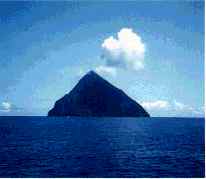
Minami-Iwojima Wilderness Area
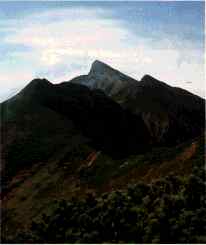
Onnebetsudake Wilderness Area
The Nature Conservation Law, the basic framework for nature conservation, protects and manages natural resources and natural ecosystems aided by other related laws.
The Nature Conservation Law makes provisions for the establishment of the following areas
- Wilderness Areas are areas that preserve and maintain the original ecosystem and that are free of human influence.
- Nature Conservation Areas are natural areas that preserve and maintain the following natural ecosystems.
- (a)Alpine and sub alpine vegetation
- (b)Outstanding natural forests
- (c)Exemplary landforms, geological sites, and natural phenomena
- (d)Rivers, lakes, marshes, and sea coasts with valuable wildlife
- (e)Marine areas with valuable wildlife
- (f)Plant and wildlife habitat that maintain a good, natural environment comparable to (a)-(e)
- Prefectural Nature
Conservation Areas are areas other than marine areas that preserve and maintain valuable natural environment at the prefectural level .
2. Designation
The Minister of the Environment designates Wilderness Areas and Nature Conservation Areas after conferring with related governmental agencies and consulting with the Nature Conservation Council. Prefectural Governors designate Prefectural Nature Conservation Areas.
Wilderness Areas and Nature Conservation Areas (As of March 31,2000)
[Item]
| NumberArea (ha) | ||
|---|---|---|
| Wilderness Area | 5 | 5,631 |
| Nature Conservation Area | 10 | 21,593 |
| Prefectural Nature Conservation Area | 528 | 73,863 |
3. Zoning for Ecosystem Protection
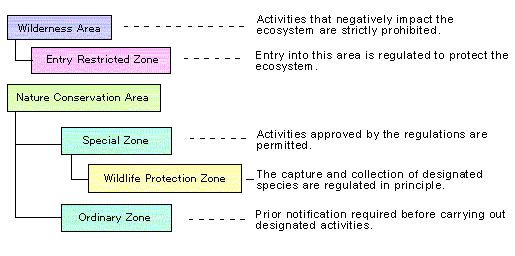
4. Scientific Survey
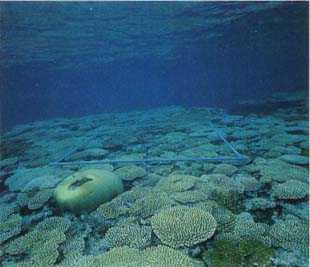
Scientific Survey
(Sakiyamawan Nature Conservation Area)
Since 1980, the Ministry of the Environment has undertaken comprehensive scientific surveys at each site to ensure the strict protection and management of designated areas and to increase public awareness on nature conservation.
A team of Japanese top scientists organized by the Ministry of the Environment extensively surveys each Wilderness Area and Nature Conservation Area. This extensive survey in Minami-Iwojima led to the identification of new species and species previously thought extinct.
Wilderness Area (Total : 5 areas 5,631 ha.)
| District | Prefecture | Area (ha) | Land Ownership | Data of Designation | Features of Natural Environment | Remarks |
|---|---|---|---|---|---|---|
| Onnebetsudake | Hokkaido | 1,895 | National forest | Feb. 4, 1980 | Alpine vegetation mainly composed of creeping pines | No Entry Restricted Zones |
| Head of River Tokachi | Hokkaido | 1,035 | National forest | Dec. 28, 1977 | Virgin forest of silver fir and fir tree | No Entry Restricted Zones |
| Head of River Ooi | Shizuoka | 1,115 | National forest | Mar. 22, 1976 | Temperate zone conifer forest and subarctic zone conifer forest | No Entry Restricted Zones |
| Minami Iwojima (Island) | Tokyo | 367 | National Forest | May 17, 1975 | Tropical and subtropical vegetation, geographical features eroded by the tide, sea birds | All areas designated as Entry Restricted Zones (on June 24, 1983) |
| Yakushima (Island) | Kagoshima | 1,219 | National forest | May 17, 1975 | Temperate zone evergreen broadleaved forest mainly composed of natural cedar and pasania | No Entry Restricted Zones |
As of February 1, 1992
Nature Conservation Area (Total : 10 areas 21,593 ha.)
| District | Prefecture | Area (ha) | Land Ownership | Data of Designation | Features of Natural Environment | Remarks |
|---|---|---|---|---|---|---|
| Ohirayama | Hokkaido | 674 | National forest | Dec. 28, 1977 | Natural forest of beech trees (Fagus crenata) located near to the northern border, limestone rock vegetation. | All areas designated as Special Zones and Wildlife Protection Zones. |
| Shirakami sanchi | Aomori, Akita | 14,043 | National forest | Oct 7 , 1992 | The largest natural beech forest in Japan, valuable flora and fauna, e.g., Black woodpecker | Some areas designated as Special Zones and Wildlife Protection Zones, all areas designated as Special Zones and Wildlife Protection Zones. |
| Hayachine | Iwate | 1,370 | National forest | May 17, 1975 | Alpine and subalpine vegetation, characteristic vegetation of the Serpentine mountain area, vertical distribution of vegetation from a beech tree zone to an alpine zone. | All areas designated as Special Zones. Some Special Zones also designated as Wildlife Protection Zones. |
| Wagadake | Iwate | 1,451 | National forest | May 21, 1981 | Beech tree forest, natural forest of "mountain recess oak" (Qleerdus monolica ver.), creeping pine forest, permanent snowfield vegetation. | All areas designated as Special Zones and Wildlife Protection Zones. |
| 0sabiyama | Tochigi | 545 | National forest | May. 16, 1981 | Alpine and subalpine vegetation, natural beech forest. | All areas designated as Special Zones. |
| Head of River Tone | Gunma | 2,318 | National forest | Dec. 28, 1977 | Alpine low tree forest, beech trees, natural forest of Quereus mongolica var., permanent snowfield vegetation, vegetation characteristic of a snowbridge zone | All areas designated as Special Zones and Wildlife Protection Zones. |
| Sasagamine | Ehime,Kochi | 537 | National forest and private forest | Mar. 31, 1982 | Beech tree forest, "Shikoku Shirabe" (evergreen conifer belonging to the pine species) | All areas designated as Special Zones, some designated as Wildlife Protection Zones. |
| Shiragadake | Kumamoto | 150 | National forest | Mar. 21, 1980 | Natural beech forest located close to the limit of southern distribution. | All areas designated as Special Zones. |
| Inaodake | Kagoshima | 377 | National forest | May 17, 1975 | Evergreen broad-leaved forest mainly composed of witch-hazels and "Urajiro oaks" (a species of beech tree) | All areas designated as Special Zones. |
| Sakiyamawan Amitoriwan (Bay) |
Okinawa | 1077 | Sea Surface | May 28, 1983 | Large groups of "Azami" coral, coral reef | All areas designated as Marine Special Zones. |
as of March 31, 2016>