

Nature & Parks
[Wildlife Protection System and Hunting Law] Wildlife Conservation in Japan
[Biodiversity] Wildlife Conservation in Japan
WILDLIFE PROTECTION SYSTEM AND THE HUNTING LAW
To protect wildlife and preserve endangered species, it is important to protect habitat, regulate hunting, prevent illegal killing, and implement any other measures necessary for the purpose. The wildlife protection system of Japan preserves wildlife by enforcing the Wildlife Protection and Hunting Law and the Law for the Conservation of Endangered Species of Wild Flora and Fauna.
Law for the Conservation of Endangered Species of Wild Fauna and Flora
(1992, Law No 75)
Objectives
The Law for the Conservation of Endangered Species of Wild Fauna and Flora recognizes the importance of wild fauna and flora as essential to the existence of humanity. This Law aims to ensure the conservation of endangered species of wild fauna and flora and to contribute to the conservation of natural surroundings for present and future generations.
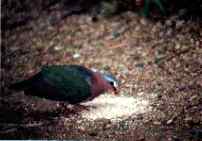
Emerald dove
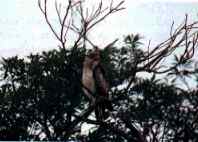
Crested serpent eagle
Definitions
"National Endangered Species" (NES) are the endangered species that are native to Japan. "International Endangered Species" (IES) are those species that are listed in the Appendix I of the Convention on International Trade in Endangered Species of Wild Fauna and Flora (CITES) or species listed as protected species in any of the bilateral migratory bird agreements/conventions with the United States of America, Australia, China, or the Russian Federation.
The National Guidelines for conservation of Endangered Species
The Japanese Government has adopted The National Guidelines for the conservation of endangered species. The Guidelines include the fundamental concept of and basic methodology for protection of organisms, protection and rehabilitation of natural habitats, and maintenance of viable population for the conservation of endangered species.
Prohibition on Acquisition and Transfer of Endangered Species
The hunting, taking, killing, or injuring of living NES specimens is prohibited unless a permit has been granted by the Director-General of the Environment Agency. The transfer of NES or IES organisms, whether dead or alive, for commercial or non-commercial purposes, and including whole organisms and parts or derivatives thereof, is also prohibited except in the following cases: a) when permission to transfer for specific purposes has been granted by the Director-General of the Environment Agency; b) when the NES is exempt from the provisions of the law; c) when the specific IES parts or products thereof (manufactured in Japan) are exempt from the provision of the law; and d) when the IES organisms have been designated or when specific materials have been previously registered.
Regulations on Transfer of IES Parts
Parties that intend to transfer designated IES parts (non-processed) within the country must first register the parts at the Japan Wildlife Research Center. The IES parts can be registered if a) they have been produced from captive-bred animals or artificially propagated plants or b) they were obtained before the time CITES measures came into force. If the IES parts have not been registered in this manner, the Director-General of the Environment Agency must issue permission to transfer the IES parts for specific purposes. Business entities must be registered if they deal in designated IES parts, which need not to be registered under the regulation. These registered entities shall keep and maintain records of their transactions. The registered entities may issue management cards to indicate the legality of the parts they handle. Furthermore, entities engaged in manufacturing final products made of specified materials with properly filled management cards may place on each product a mark issued by the Director-General of the Agency, relevant ministers, or designated public organizations.
CITES and Domestic Transfer Control
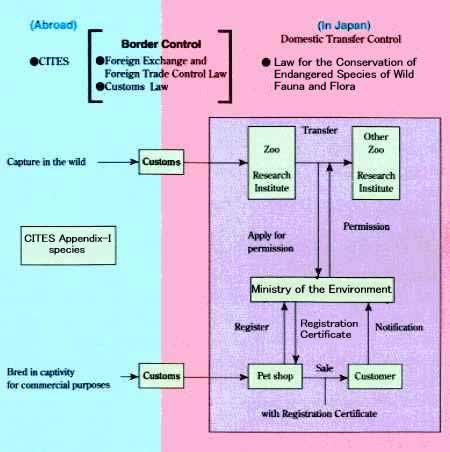
Wildlife Protection and Hunting Law
(Law No.32 1918)
The Wildlife Protection and Hunting Law was created to protect birds and mammals, to increase populations of birds and mammals, and to control pests through the implementation of wildlife protection projects and hunting controls.
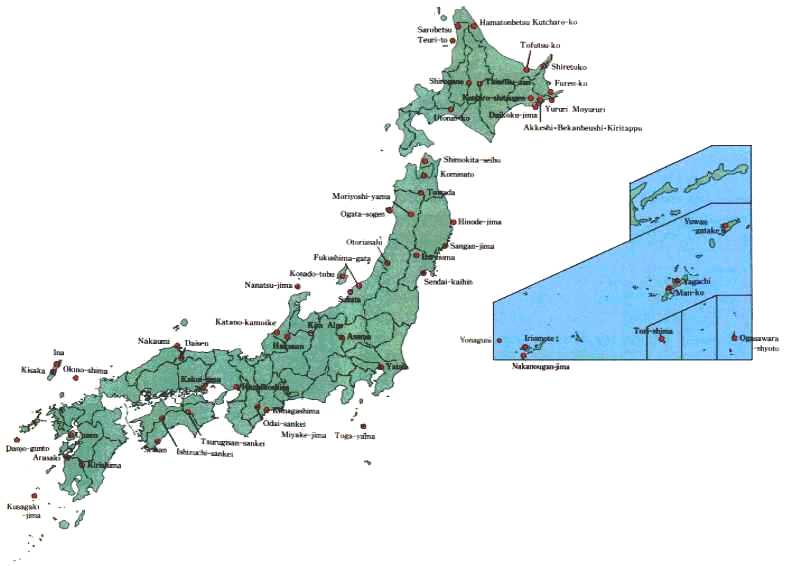
Wildlife Protection Areas in Japan
| National | Prefectural | |||
|---|---|---|---|---|
| No. of areasandArea(1000ha) | No. of areasandArea(1000ha) | |||
| Wildlife Protection Areas | 54 | 491 | 3,713 | 3,110 |
| Special Protection Areas | 42 | 112 | 591 | 184 |
As of March 1998
Wildlife Protection Project Plan
The Director-General of the Environment Agency has specified guidelines to promote and coordinate medium-term wildlife protection projects. These guidelines require prefectural governor to establish an integral plan for projects to protect wildlife while considering regional concerns.
Regulations for the protection of mammals and birds
- a. Restrictions on species
- The Director-General of the Environment Agency shall specify game species. Only game species may be hunted lawfully.
- * Game birds: 29 species, including Phasianus colchicus (green pheasant), Phasianus soemmerringii (copper pheasant), etc.
- * Game animals: 18 species, including Cervus nippon (sika-deer), Lepus brachyurus (Japanese hare), etc.
- b. Restrictions on hunting areas
- Hunting is prohibited in areas designated by the Director-General of the Agency, prefectural governors, or other bodies, and include permanent or temporary wildlife protection areas, public roads, and parks.
- c. Restrictions on hunting period and the number of captures
- d. Restrictions on hunting methods
- The use of mist nets, large-caliber firearms, explosives, toxic chemicals is prohibited.
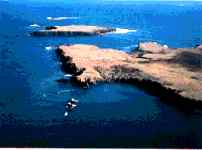
Yururi Moyururi Is.
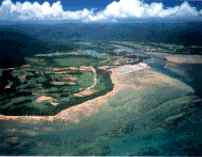
Iriomote Is.
Hunting license and Hunter Registration
Any individual who intends to hunt must be granted an appropriate hunting license issued by the governor of the prefecture of his/her residence. In addition, he/she must register with the governors of the prefectures where he/she intends to hunt. The hunting license is valid for three years.
Establishment of Wildlife Protection Areas and Designation of Special Wildlife Protection Areas
The Director-General of the Environment Agency and prefectural governors are empowered to establish wildlife protection areas and to designate special wildlife protection areas that have a maximum duration of twenty years within wildlife protection areas. Wildlife protection areas are established to protect and promote the propagation of birds and mammals. Hunting of wildlife is prohibited within such areas.
In special wildlife protection areas, the approval of the Director-General of the Agency or prefectural governors must be obtained before reclaiming wetlands, cutting trees, or constructing any structures.
Ministry of the Environment Government of Japan