

Nature & Parks
[International Cooperation] Wildlife Conservation in Japan
[Biodiversity] Wildlife Conservation in Japan
INTERNATIONAL COOPERATION
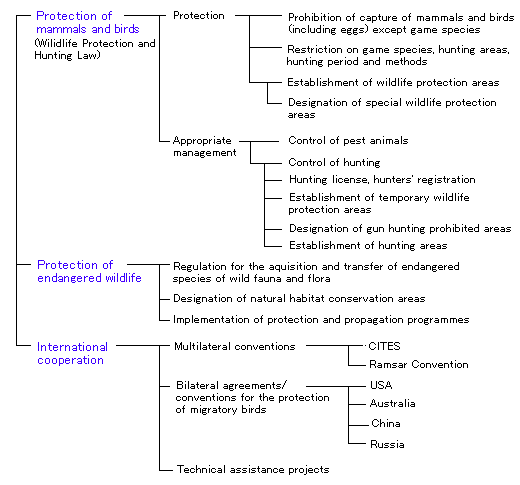
International cooperation plays an important role in the promotion of global wildlife protection, and it is expected that Japan will continue to actively contribute in this field. Japan has signed both CITES and the Ramsar Convention and has also concluded bilateral conventions and agreements for the protection of migratory birds with the United States of America, Australia, China, and the Russian Federation. In addition, Japan has implemented several cooperative projects in developing countries.
CITES
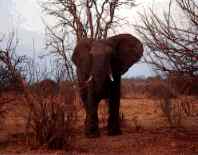
African Elephant
(Loxodonta africana))
BOTSWANA
Japan signed the Convention on International Trade in Endangered Species of Wild Fauna and Flora (CITES) in 1980. Japan assigned the Ministry of International Trade and Industry as the Management Authority and the Environment Agency and the Ministry of Agriculture, Forestry, and Fisheries as the Scientific Authorities. The Japanese government enforces the Customs Law and the Foreign Exchange and Foreign Trade Control Law for border control in regards to CITES implementation. Internal trade mentioned in CITES Appendix-I species is controlled under the Law for the Conservation of Endangered Species of Wild Fauna and Flora.
Because Japan is a major consumer of wildlife products, the appropriate implementation of CITES is one of the world's greatest concerns. Although Japan once held reservations on fourteen CITES Appendix-I species, the Government has made efforts to reduce the number of reservations and has withdrawn reservations on eight of those species. The Japanese Government hosted the eighth meeting of the Conference of the Parties to CITES in 1992. Japan has also provided funding, through the CITES Secretariat, to numerous projects on CITES-listed species and will contribute more actively to CITES for the proper management and sustainable use of wildlife.
Ramsar Convention
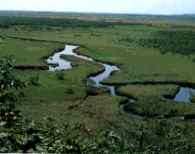
Ramsar site: KUSHIRO-SHITSUGEN
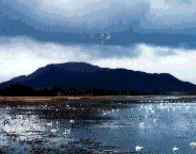
Ramsar Site at SAKATA
In 1980, Japan joined the Convention on Wetlands of International Importance Especially as Waterfowl Habitat (the Ramsar Convention). The Japanese government hosted the fifth meeting of the Conference of the Contracting Parties to the Ramsar Convention in 1993 held in Kushiro, Hokkaido.
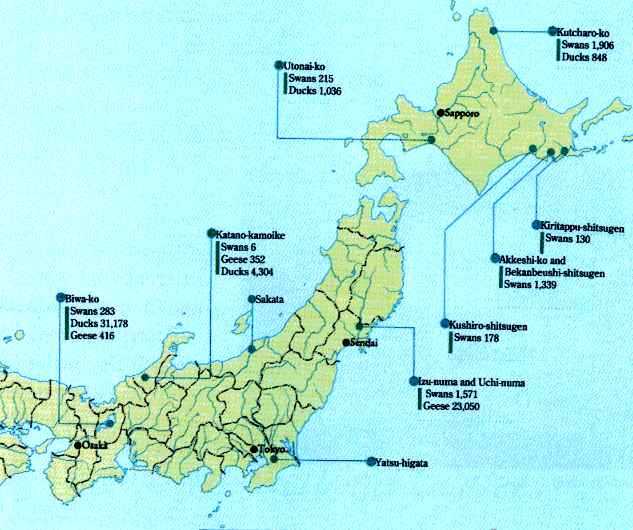
Currently, Japan has ten sites designated as wetlands for inclusion in the List of Wetlands of International Importance (Ramsar sites) as shown in the figure below. Japan has been making efforts to increase its number of Ramsar sites.
Japan has taken the lead in inviting non-party Asian countries to Ramsar-related meetings to expedite their participation to the Ramsar Convention. For this purpose, the Environment Agency held a 1994international workshop on the conservation of migratory water birds and their wetland habitats in the East Asian-Australasian Flyway.
Location of Ramsar Sites (As of March 1996)
Migratory Bird Conventions and Agreements
Japan concluded bilateral conventions or agreements for the protection of migratory birds, birds in danger of extinction, and their environment with the United States of America in 1974, Australia in 1981, China in 1981 (migratory birds only), and the USSR (now the Russian Federation) in 1988. For each convention or agreement, consultations are held biennially in order to exchange information on implementing the convention, which includes the protection of migratory birds, monitoring of habitat condition, and promoting research projects. Japan has plans to conclude further conventions/agreements with other countries, such as the Republic of Korea.
From June to July of 1991, a joint Japanese-Russo ornithological survey was conducted in the Kronotsky Nature Reserve on the east coast of the Kamchatka Peninsula. This survey was proposed by the Russian Federation under the Japan-Russia Migratory Bird Convention.
International Cooperation Projects

Bird-banding
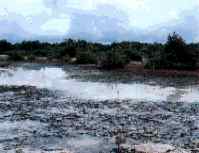
Cooperation in Wetland Conservation
(Olango Island)
Cooperation in Wetland Conservation
The Environment Agency initiated a five-year project in 1989 to set up conservation programs for wetlands and other important bird habitats in Southeast Asia in cooperation with the countries of the region. During 1990-1992, the Agency developed a program for the protection of wetlands and birds in Olango Island in the Philippines in collaboration with the Wild Bird Society of Japan (WBSJ), the Department of Environment and Natural Resources of the Government of the Philippines, and the Asian Wetland Bureau - Philippines (currently Wetlands International Asia-Pacific).
Asia-Pacific Migratory Water Bird Flyway Network
The Asia-Pacific Migratory Water Bird Flyway Network was prepared under the stewardship of the Wetlands International-Asia Pacific with financial support from the Environment Agency and Environment Australia (formerly Australian Nature Conservation Agency). The Network is based on the Kushiro Initiative announced in December 1994 in the summary of the international workshop on conservation of migratory water birds and their wetlands habitats in the East Asian-Australasian flyway.
The Initiative provides for three types of reserves: shorebirds, cranes, and waterfowls. In 1996, Japan nominated Yatsu tidal-flat (Chiba Prefecture) and the Yoshino Estuary (Tokushima Prefecture) to be included in the Shorebird Reserve Network.
Bird-banding Workshops
Southeast Asia offers very importance wintering grounds and staging sites for migratory birds that also visit Japan. Although information on migratory routes is important for the effective conservation of migratory birds, bird-banding research has not been conducted systematically in this region.
In collaboration with the Yamashina Institute for Ornithology and the Asian Wetland Bureau (currently Wetlands International Asia-Pacific), the Environment Agency carried out a series of bird-banding training workshops: the Philippines (1989), Thailand (1991 and 1993), Indonesia (1992), and Vietnam (1994). These workshops attracted the participation of wildlife protection agencies and NGOS in these and neighboring countries.
Wildlife Protection System of Japan
Wildlife Centers and Water Bird-Wetland Centers

Kushiro Wildlife Center
The Environment Agency has been setting up Wildlife Centers, facilities that model activities such as protecting or feeding endangered species or improving the habitat in areas such as Kushiro, Sado and Iriomote. For promoting the conservation of water birds and wetlands as their habitat, the Agency has also constructed Water Bird-Wetland Centers in Akkeshi and Kutcharo-ko as base stations for scientific research and education.
Three Wildlife Centers are now being constructed in Haboro, Yambaru, and Tsushima and future construction of Wildlife Centers and Water Bird-Wetland Centers for other places are planned.
Ministry of the Environment Government of Japan