

Nature & Parks
[PROTECTION AND MANAGEMENT] WETLAND IN JAPAN
[Biodiversity] Wetland in Japan
4.PROTECTION AND MANAGEMENT
The laws that exist to conserve the natural environment of wetlands in Japan are the Nature Conservation Law, the Natural Parks Law, The Law for the Protection of Birds and Mammals, and the Law for the Conservation of Endangered Species of Wild Fauna and Flora.
There are also non-governmental organizations and national trusts that work for the conservation of the natural environment in cooperation with a large number of volunteers.
The Nature Conservation Law
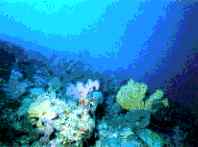
Coral reef in Sakiyama Bay
Areas maintaining their primitive or crucial ecosystems may be designated as Wilderness Areas or Nature Conservation Areas. In Wilderness Areas, any activity that may impact the ecosystem is strictly prohibited. In the special zones of Nature Conservation Areas, activities such as cutting trees, constructing facilities, or reclaiming water surfaces, are restricted. There are also Prefectural Nature Conservation Areas designated by prefectural governments according to ordinances enacted by prefectural legislative bodies.
| Sites | Area (ha) | |
|---|---|---|
| Wilderness Area | 5 | 5,631 |
| Nature Conservation Area | 10 | 22,542 |
| Prefectural Nature Conservation Area | 545 | 77,409 |
Nature Conservation Areas, as of March 2016
The Nature Parks Law
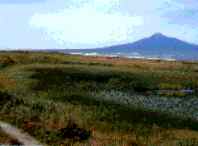
Rishiri-Rebun-Satobetsu National Park
Places of scenic beauty are designated as National Parks or Quasi-National Parks. In the special protection zones and special zones within National Park and Quasi-National Park areas, activities such as cutting trees, constructing facilities, and reclaiming water surfaces, are restricted. There are also Prefectural Natural Parks, which are designated by prefectural governments according to ordinances enacted by prefectural bodies.
| Sites | Area (ha) | |
|---|---|---|
| National Park | 28 | 2,047,265 |
| Quasi-National Park | 55 | 1,343,231 |
| Prefectural Natural Park | 304 | 1,945,165 |
Natural Parks, as of March 1998
The Law for the Protection of Birds and Mammals
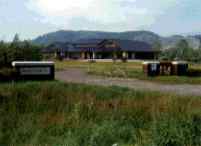
Kushiro-shitsugen Wildlife Center
Important migratory areas and breeding sites for mammals and birds are designated as Protection Areas for Birds and Mammals. If necessary, Special Protection Areas are designated within the Protection Areas for Birds and Mammals where reclaiming water surfaces is restricted.
| National | Prefectural | |||
|---|---|---|---|---|
| No. of places | Area (thousand ha) | No. of places | Area (thousand ha) | |
| Protection Area for Birds and Mammals | 54 | 491 | 3,875 | 3,085 |
| Special Protection Area | 42 | 117 | 581 | 147 |
As of March 1998
The Law for Conservation of Endangered Species of Wild Fauna and Flora
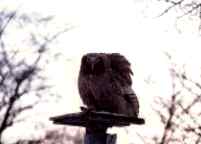
Blaskiston's Fish Owl, a Japanese subspecies
(Ketupa blakistoni blakistoni)
The Law for Conservation of Endangered Species of Wild Fauna and Flora strictly regulated the taking, transferring, or trading of endangered wild fauna and flora species designated by law. If deemed necessary, "Natural Habitat Conservation Areas" may be designated for the conservation of Domestic Endangered Species. In these areas, the following activities are require prior permission: 1) construction, 2) modification of land or habitat, 3) mining, 4) reclamation, 5) changing of the water level, 6) cutting trees, and 7) the taking of predatory species designated as Domestic Endangered Species.
The Japanese Government promotes the rehabilitation of the natural habitat and the maintenance of viable populations of Domestic Endangered Species.
Promotion of NGO Activities and the Establishment of Volunteer Environmental Foundations
Motivated by the dynamic activities of the U.K. National Trust movement in nature and cultural heritage conservation, volunteer activities in certain areas, such as Shiretoko Peninsula in Hokkaido and Tenjinzaki Cape in Wakayama Prefecture, were initiated to invite contributions nationwide for the purchase of sites of outstanding natural beauty and intact ecosystems. The intent was to conserve these sites for the neighboring communities' quality of life and as a national heritage to be passed on to future generations.
Ministry of the Environment has supported and encouraged this volunteer movement, which has been recognized for its effectiveness in conserving local outstanding sites.
In accordance with the tax system reform in 1985 and 1986, contributions to authorized public foundations for nature conservation may be exempted or deducted from income tax, corporate tax, and/or fixed property tax.
The first voluntary public foundation for nature conservation, a group working to conserve Tenjinzaki Cape, was authorized in January 1987. To encourage further voluntary nature conservation, Ministry of the Environment is publishing a manual on how to establish foundations.
Ministry of the Environment Government of Japan